Oh boy, does this topic ever get me riled up.
Back in 1976 I worked with several bands, notably Sofrito--a salsa band we made up out of whole cloth--and Scary Lala, the guitar-based quartet consisting of leader Larry Scala, Tom Moelering on bass, and me on various saxophones. I was living by the yacht harbor in a place we rented for around $300 + utilities. When the weekly total of gig money was made, I would often have pulled in $300-400 for just 4-5 gigs, most of them recurring weekly slots at local restaurants like the New Riverside (Francis Tong!), the Crows News (2 blocks from my house), the Pacific Steamship Company by Harvey West Park, and a couple occasional places downtown like Pearl Alley and the Catalyst.
The bad news is that the $40 gig back then pays $30 now, and that's without adjusting the cost of living from that era to this. You already know what I paid for rent, and gas was still under 50 cents a gallon in 1976. Some of the places even just give the band a meal and the right to lay out the tip jar. Some of the places noted above are still in business, and usually it'll be Olaf playing them on drums. How he's managed to make the adjustments from yesterday's money to today's is a great mystery to me. He's a fine drummer, a reliable guy to have on the gig. But can you think of any other profession where the wages paid are the same or less than they were 35+ years ago?
I didn't think you could.
So what's different?
First and foremost, the owners of restaurants and clubs are operating with a different set of assumptions about musicians. There's enough squeeze on the jazz musicians from the retired set who've moved into town with no professional aspirations but a willingness to play for free. That's new. There used to be young energetic rockers who'd do it for free, and that whole scene collapsed when the club owners found their liquor sales down.
A side note: I am a musician, but I am also in charge of selling beer, wine, mixed drinks and food. I'm the guy up on the bandstand counting drinks and making sure that our crowd for the evening is spending money. If we need to, I adjust the repertoire and the "heat." I consider this to be a sacred responsibility.
Now I know it's a time of shrinking margins, and I know if the ASCAP guy comes around, the BMI guy is sure to follow with licensing fees nobody told you about when you were opening a restaurant. But, and I'm speaking to club owners everywhere here, how can you in good conscience pay less to a band of musicians that fill your bar with drinkers than you pay your lowest-rung server?
Santa Cruz was a whole different city back then, of course. In the bicentennial year, there were two (TWO!) television stations you could get if your rabbit ears were set just right, and no cable TV. There was one screen each at the Nickelodeon, the Del Mar, the Rio, and the Capitola Theatre. The trek over Highway 17 and thence to "civilization" was a lot curvier and more dangerous back then, so there there's another reason to support local bands.
And I think there were less expectations about music generally, so that whatever one found out there was just good enough. (I've got some Sofrito tapes that Steve Peterson made with a handheld cassette recorder, and they don't sound half bad. I also have sound files of the 1972 Cabrillo Jazz Ensemble which are downright frightening, the best big band I think I ever played in.)
So what are the musicians to do?
I for one am venturing into the belly of the beast and started a biweekly gig under my name at a notorious venue just to see what the deal is. All we get are the contents of the tip jar, a drink or two, and a meal for two hours with a quartet.
I'll let you know how it goes. I want to gain the perspective of the the musicians who work these gigs, the restauranteurs who supply the space for what might be a working rehearsal, and the folks who come and listen.
I've already been the latter, hearing bands whose members I know. This I know from the experience: It's an odd thing to know that the musicians putting in their dinner orders at the end of the first set are ordering their pay.
Still, it can get worse. I know that there are clubs in Los Angeles and Austin where bands are responsible for selling a set number of tickets for each gig. THEN they play. And if the door count and the bar receipts are favorable, they might get payment for their efforts.
Don't like the system? Next!!
It hasn't gotten that bad here, yet.
I have a theory that there's an invisible tollbooth at Summit Road on Highway 17 which neatly divides Santa Clara County (where there are both jobs and commerce) from Santa Cruz County (which has neither). When you go through that invisible tollbooth you take a vow of poverty, which makes those who live here convinced that, even though they may drive a 700 series BMW and live in a house worth three quarters of a million dollars, they are poor.
I think that's the real issue. A poverty of spirit prevents these sackcloth and ashes wearing simpletons from doing the right thing: You gotta pay the band.
More later.
Showing posts with label Santa Cruz. Show all posts
Showing posts with label Santa Cruz. Show all posts
Sunday, May 19, 2013

Wednesday, February 20, 2013
Well, here we go again . . .
Only it's my hope that I'm stitching some of the scattered threads of this 30+ year old project into something that actually represents a business now.

We've had a couple very successful gigs at Bocci's Cellar since I last posted. Stella has proven to be an tremendous asset, unlike a lot of singers I choose not to name. I've been writing like a fiend. The band never seems to need rehearsing, and we've been so well received at Bocci's that we have steady second Fridays of each month until the place closes for party season come December, 2013. Nancy Carr, the ball of fire who took over running the Friday Swing Dance Happy Hours, suggested we might make it a goal to resurrect the spirit of the old Catalyst Happy Hours with Jake Stock and Wally. Thinking this was a pretty good idea, I put together this press release, which I am mailing out to press outlets today:

. . . and here we are, almost three weeks out, with plenty of time to get this ball rolling. The big news, as may be inferred from the poster, is that Art Baron is going to play trombone with us on the 8th of March. While we didn't go to the same school, I was in 8th grade across town from Art in Fairfield, Connecticut when we played together in the first big band either of us was in, the Fairfield Police Athletic League Dance Band. (Shout out to my Irish twin sister Noreen, who also played in it!) My family returned to California when the next year, but Arthur and I stayed in touch, and when my dad got another job in Connecticut and we returned to Fairfield, we were both seasoned pros of many dances and jam sessions, me a sophomore in high school, Art a junior. We got to fill in whenever my dad's various bands needed personnel (and when do big bands not need personnel?) and remember well the great times with my dad and his friends that Art and I had.
When my dad suddenly died, the family packed up and headed back to California. Art and I never lost touch, though. I was a high school senior when he entered Berklee (my dad's alma mater) in 1968. He studied with Phil Wilson, who took a shine to him, and befriended a trombonist-arranger from Monterey called Jackson Stock, who would later be the guy sitting next to me at the Catalyst that taught me the forms of Dixieland tunes. Art hung up his spurs at Berklee for a road gig with Buddy Rich, followed by and extended association with Stevie Wonder.
I remember there were only two soloists listed on Stevie's album Music of my Mind, which I bought when I was a freshman at UCSC. One was guitarist Buzz Feiten, whose brother, photographer-trombonist John Feiten, shared a mailbox with me at College Five, UCSC because of the alphabetical proximity of our surnames. The other soloist was Art Baron on trombone. Coincidence?
During his Stevie tenure, Art came out to Santa Cruz a couple times for a hang with me, Jack Stock, Jim Baum, and may others. Here's a shot of us playing music Jack and I put together behind the pre-earthquake Bookshop Santa Cruz.

Then, as I was graduating from UCSC, word came that Art, aged 23, had been hired by Duke Ellington. THAT Duke Ellington. He'd been hired to play the Tricky Sam plunger parts. I mean, come on, really? I knew Art was great, but there usually was an old guy standing in the way from any of these fantastic road gigs! How was this possible?
I remember walking on the beach one night at 26th Avenue after I heard the good news with Dian Smith, my girlfriend and fellow saxophonist. I was comfortable living on the cheap in Santa Cruz, playing in the Cabrillo band, occasionally doing gigs, but this was seriously challenging my world. I decided that night that I too would get a glamorous road gig (Ah! If I'd known then what I know now!). The Cabrillo band was soon to open for Stan Kenton's band at the Santa Cruz Civic Auditorium, and I decided that this was a big chance for me. I was playing baritone (a niche market instrument, much like Art's plunger trombone), and I knew Lile would feature me on a number or two. So when the band arrived in town on their glamorous bus (except for Glen Stewart, whose son drove him in his Porsche) with their leather jackets and their hangers-on, staying at an otherwise drab motel on Ocean Street, there I was, waiting in the weeds.
Tony Campise, a hero of this blog from my days in Austin, had just been married, so rather than schlocking onto him, I fused with baritone saxophonist Roy Reynolds. When Roy grew weary and switched to a vacant tenor chair in the band, about six months later, I got the call for the freed-up baritone slot. Off I went, January 5, 1975, 23 years old for another 24 days until my 24th birthday, which we spent crossing the Atlantic Ocean on a PanAm 747.
What happened next doesn't bear repeating, but suffice to say that I did my term with Stan, and I trace all of it back to the feelings I had when I was walking the beach with Dian that night, trying to make sense out of Art getting a gig with Duke Ellington. That feeling still spurs me on from time to time when I waver in my resolve.
In other news, I put together a new band website, http://newflamintoswing.com. I joined Gigmasters for a trial six months, and you can find us by searching for Swing Bands in Santa Cruz. I'm toying with the idea of an organ trio, because how much better is it to call two guys instead of 11?
I got a replacement road bike, but I still miss my Bruce Gordon BLT, which was stolen in September. I'm trying to get serious about biking, although serious at 62 and serious at 22 are two way different things. Still, I am putting in the miles.
Oh, and I am, I guess, somehow retired, as my main income stream comes from my Social Security benefits. I opened my account at my 62nd birthday. All those years of working for The Man finally pay off!
Thursday, February 2, 2012
A year has passed.
A year has passed since I moved to Santa Cruz, with my eyes wide open. I knew then that it'd be a hard slog, and I haven't seen anything yet that contradicts that assumption. I've had comical musical experiences (see this post) and meaningful ones too, like the Cabrillo Reunion back in October, where most of the 1975 jazz ensemble's members got together with Lile Crews at the helm once again.
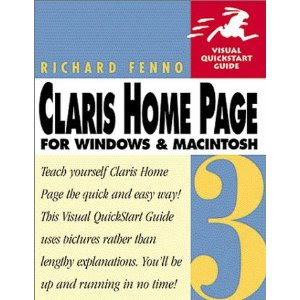 I'm also going to try a little writing again. I wrote this book for Peachpit Press in 1998. Unfortunately the product was pulled off the market the very week the book was released, the reason being that Steve Jobs had returned to Apple and decided to reallocate the software development, canceling titles that were under the Claris banner. (Not that I'm pissed at his memory, because at the time I was mopping up Apple shares with my 401(K) rollover account. If he hadn't closed that unprofitable appendage of Filemaker along with about a million other details, I'd have a lot less in that account than I do now.)
Making a living hasn't been easy. I took a part-time job at a struggling music store. I've never been this close to the ground in retail. Always I had the advantage of being detached from the customer by a distributor, importer or wholesaler when I ventured into the music trades.
Sue's been marvelously supportive. In the last year, I landed a couple gigs–one for my big band even–through her kind offices. But it's time to get serious on a number of levels, including hastening the divorce and getting rent checks in on time, as she's struggling too.
So I've decided that I'm going to redouble my efforts to get my various bands hired. I already built a website called fennomusic.com that's still got a few glaring deficiencies, although the structure and look are just about right.
It's been a long haul from the time I decided to set up my big band once again, through my ship contracts, to the heart attack in 2008, through my marriage ending, leaving Austin, and here in Santa Cruz, where I had to step on the first rung of a ladder that I'd pretty much climbed 35+ years ago, where people play for free nowadays and restaurants expect not to pay musicians for making music.

What has me intrigued is Apple's new textbook initiative and the tool they released for authoring textbooks. For free. Unlike when I wrote and produced my last book, which I did the prepress production on as well, there will be no copy editing through MS Word (ugh!) files passed back and forth among several editors, page proofs generated in Quark ExPress, and then off to some RR Donelley plant in northwest Ohio. Just my iMac and maybe an iPad to test pages.
There are several things I feel I know enough about to be able to produce a text aimed at a very tight market segment. More on this later.
Then there's the issue of the royalties. If I remember correctly I made less than 2 bucks on each book sold. Cover price was $16.95 if I remember right. They sold a lot of them eventually, but the take per book was less than stellar. I was green behind the ears, though, it being my first book.
That's what I don't understand about pundits bloviating about Apple's cut of a finished textbook in the iTunes store. Seventy percent of a book going to the author sounds pretty good to me!
Whether that's good enough to get me going and sustain me through the process, well, that's another matter.
I'm also thinking Sue, who just earned a French Wine Expert shingle from the French Wine Institute, and who just returned from an almost mythical tour of Burgundy with a group of admitted partisans, has a book in her waiting to gently be extracted. The Women Vintners of Burgundy, perhaps? Or something a bit more general?
Again, more as it develops.
Meanwhile, I'm playing almost every night of the week somewhere in Santa Cruz, usually for free or a cut of the tip jar. I'm writing some charts for Dan Young's Pleasure Point Horns which we're about to unleash on an indifferent universe. I'm doing my best to get a saxophone quartet off the ground. And I'm thinking about hiring an organizer. I'm wondering when we can do a reunion of Sofrito.
Monday, February 2, 2009
When My Horns Were Stolen
There was a time when all the musicians who played softball in Santa Cruz rose as one to my aid. Between the first version of Sofrito and the second, after I’d gone to New York with drummer Jim Baum and came back to town, after I’d played alto, baritone, flute, clarinet and bass clarinet with the Glenn Miller Orchestra, I was in town to play a few tentative gigs with what became Sofrito once again, transformed.
My entire net worth (expressed in woodwind instruments) could fit into the back seat of my 1964 Dodge Dart, and that’s where it was when, after one of those gigs, I arrived at the house the girl who became the mother of my children. I may have locked the doors of the Dart. Her west side house was plenty quiet at 1 in the morning when I arrived.
We were pretty deep into softball then, as I’ve described elsewhere, playing long ball on the short-porch fields of Branciforte Park as many afternoons as not and taking in an Oakland A’s game once every couple weeks.
While the blissful ignorance of all people who trust human nature to be a benign force in the universe, there was my Dart, loaded up with expensive woodwinds, most of them Selmer Paris. Like an idiot, I compounded my stupidity by bringing in my flute, an Armstrong worth maybe $80.
Some time in the night, the car’s contents were removed. I knew that the car’s locks could be easily picked. I was blindly trusting the universe to protect me from villains. Someone with other ideas strolled by in the wee hours.
When I woke up at the crack of noon, I discovered the deed. There was no broken glass, but none would have been required, because any 1964 Dodge Dart could be unlocked with a coat hanger. My horns were gone.
So I called my home team. We had a meeting, dividing the city up into sectors, some heading for the music dealers, some for the pawn shops, some for the schools. Soon we received information about a guy in town who was bragging about coming into some woodwind instruments suddenly. It’s hard to imagine back then that this whole thing was co-ordinated without the benefit of cel phones, which at the time were toys of the idle rich.
The sun went down, and the softball gang had grown militant. They were going to track this guy down if it took all night. Sadly, there was no progress until early the next morning, when my once and future wife went off to Cabrillo, the local junior college and, finding a message chalked to one of the boards of the music department, called the guy’s number and recovered every one of my horns.
So I guess we were not all that successful in our plans to enforce simple justice. The guy left town, and the goods were recovered by Sue Slater and Holly Ray, not by the softball guys with the testosterone pumping.
No matter. We had a potluck at the Kuumbwa Jazz Center to celebrate the oddest thing, the coming together of forces for good in Santa Cruz, where it was at times impossible to get people to see mutual interest in anything. We played music that night, and it was good.
Treasured friends who took part in this mobilization included Joyce Cooper, Sue Slater, Peter Burchard (then known as Peter Ashley), Steve Bennett back when he still flew single-engine planes, Olaf Schiappicase, Dennis Broughton, and many, many others.
My entire net worth (expressed in woodwind instruments) could fit into the back seat of my 1964 Dodge Dart, and that’s where it was when, after one of those gigs, I arrived at the house the girl who became the mother of my children. I may have locked the doors of the Dart. Her west side house was plenty quiet at 1 in the morning when I arrived.
We were pretty deep into softball then, as I’ve described elsewhere, playing long ball on the short-porch fields of Branciforte Park as many afternoons as not and taking in an Oakland A’s game once every couple weeks.
While the blissful ignorance of all people who trust human nature to be a benign force in the universe, there was my Dart, loaded up with expensive woodwinds, most of them Selmer Paris. Like an idiot, I compounded my stupidity by bringing in my flute, an Armstrong worth maybe $80.
Some time in the night, the car’s contents were removed. I knew that the car’s locks could be easily picked. I was blindly trusting the universe to protect me from villains. Someone with other ideas strolled by in the wee hours.
When I woke up at the crack of noon, I discovered the deed. There was no broken glass, but none would have been required, because any 1964 Dodge Dart could be unlocked with a coat hanger. My horns were gone.
So I called my home team. We had a meeting, dividing the city up into sectors, some heading for the music dealers, some for the pawn shops, some for the schools. Soon we received information about a guy in town who was bragging about coming into some woodwind instruments suddenly. It’s hard to imagine back then that this whole thing was co-ordinated without the benefit of cel phones, which at the time were toys of the idle rich.
The sun went down, and the softball gang had grown militant. They were going to track this guy down if it took all night. Sadly, there was no progress until early the next morning, when my once and future wife went off to Cabrillo, the local junior college and, finding a message chalked to one of the boards of the music department, called the guy’s number and recovered every one of my horns.
So I guess we were not all that successful in our plans to enforce simple justice. The guy left town, and the goods were recovered by Sue Slater and Holly Ray, not by the softball guys with the testosterone pumping.
No matter. We had a potluck at the Kuumbwa Jazz Center to celebrate the oddest thing, the coming together of forces for good in Santa Cruz, where it was at times impossible to get people to see mutual interest in anything. We played music that night, and it was good.
Treasured friends who took part in this mobilization included Joyce Cooper, Sue Slater, Peter Burchard (then known as Peter Ashley), Steve Bennett back when he still flew single-engine planes, Olaf Schiappicase, Dennis Broughton, and many, many others.
Saturday, December 27, 2008
David O'Connor: Still the Funniest Guy I Know.
 |
| From Historical Artifacts |
David and I played together on Sofrito, the band that introduced salsa music to hippie culture in Santa Cruz, California. This was back in 1977. David had gotten off the road with Leonard Cohen (and before that Buffie St. Marie), and I was between road adventures with Stan Kenton and the Glenn Miller Orchestra. Dave had been working with the rhythm section which had been added to the drums. The drummers consisted of Dennis Broughton, Michael Spiro, and Raul Rivera, who sang and started it all. I used to say that Raul had done the equivalent of parachuting into the Amazon and setting up a Gilbert & Sullivan troupe made entirely of native peoples. The band grew outward from several dance classes at UCSC which the three drummers had played for. The drums were always the core of the band, and they worked at it, doing Latin rhythms for the dance classes.
Raul never imagined himself as a teacher, I’m sure. He had a shady past that included stays in the grey bar hotel on charges stemming from addiction. But what he did was remarkable because he taught the genuine thing to a couple white kids from the suburbs and made them a cohesive salsa drum section. And then they went out looking for a band.
Once they had their grooves down--the afinque--the guitar (David) and the bass (Fritz) were added. Fritz had to learn that in most situations he wouldn’t be playing on beat one of the measure. It was hard to convert jazz guys to this way of thinking, I found out later, but Fritz had no problem with it.
So then they were ready for horns, and that meant someone had to write the charts, and someone mentioned me, and one thing led to another . . .
We started one off night at the Pacific Coast Steamship Company, a club owned by a one-armed framing carpenter who had a successful business but needed a place to drink. I’m afraid we violated the first rule of working in a club, because we didn’t know that he wanted to be left alone to quietly drink his beer. The problem was we packed the place, from the very beginning. We instantly got moved over to weekends, then Fridays and Saturdays, then we added Wednesdays. I remember one night dividing the money up at the pool table and O’Connor asking as his wad was passed to him, “Any of you boys want to play a little poker?”
Soon we were on the cover of the local alternative paper. We started to cross over into local rock star status. Still, we played places like the Crow’s Nest at the harbor, which meant no dancing and a very small stage, and low wages but a great dinner for each band member. For me, as I lived on Sixth Street, it meant I could walk to work.
Sofrito suffered a collapse when Raul let his demons get ahold of him, but it was too late: Salsa was out of the bag in Santa Cruz. We were too happening. The band splintered into several bands and a softball team as well. We made regular pilgrimages to Oakland to root for the then-hapless A’s. Cornelius Bumpus, one of the guys we ran with regularly, got an unbelievable gig that he deserved from the Doobie Brothers.
I left Santa Cruz in 1979, convinced that the remote location and easy lifestyle of Santa Cruz were messing for my chances at a gig.
A couple years later I heard that David O’Connor suffered a stroke. But I heard he was fighting back, that it took him five years of therapy to be able to play guitar again. He had married, but his wife stuck with him, against the odds stacked against his recovery as a musician in a remote corner of Northern California without health insurance.
I started talking to David again last month. His speech can be halting at times, but he’s still the funniest guy I know. He’s got a website with mp3 samples, and he’s doing pretty well with the wedding business, a furrow that my brother and I plow as well in Austin.
It’s funny when you talk to a guy from the remote past who naturally feels like he’s taking up the conversation when you last spoke. That’s what it’s been like talking to Dave. I look forward to talking again.
Friday, December 19, 2008
The Bumpus Rule

Corney was so devoted to music that when he made no money, it was no problem. He lived in his blue 1965 Volkswagen bug, not because he liked to, but because, on a musician’s wages, it was his only option. He’d play in the afternoons at Cooper House, the old county courthouse which had been converted into a place for the idle classes to fritter away their daylight hours over a walnut salad and Anchor Steam Beer. On the outdoor patio, de facto jazz groups played under a mural of jazz musicians playing at Cooper House. All of them including Corney were immortalized in that mural, which fell down and went to the sanitary landfill when the Loma Prieta earthquake changed Santa Cruz forever.
Cornelius Bumpus, who was one of the few Santa Cruz natives I knew, refused to sleep in Santa Cruz, even in his Volkswagen.
The hat having been passed at Cooper House, the tips having been divided and distributed, Corney would rev up his bug and head out of town on Highway 17, headed for parts unknown, where he made camp and curled up to sleep.
One spring in the late seventies, baseball fever gripped the musicians of Santa Cruz. It might have been David O’Connor’s admonition that the Oakland A’s--who were between owners and saw their attendance slide from pathetic to insignificant--“needed our support.”
David, a bubbly Irish wit who had toured with Buffy St. Marie, Leonard Cohen and the Lettermen, organized (insofar as we could be organized) outings to day games at the Oakland ballyard, a vast expanse of poured concrete and genuine grass where we made up most of the crowd in the left field bleachers. We drank way too much beer those afternoons, due in large part to the fact that we had our own, personal beer vendors. O’Conner drove most of the time in the gigantic car that Steve Bennet owned. If memory serves, David was the one of us who was sober enough to handle Highway 17 and its blind curves. We drove to one day game in Jaws, also from the Bennet stable. Jaws was a Chevy crew van, retired from the Forest Service. I think Zack Arbios, who was not a musician, sold Jaws to Steve, who sold it eventually to drummer Peter Burchard.
I have in my mind a picture frozen in amber of O’Conner behind the wheel of Bennet’s massive Chrysler, four of us in the back seat giggling like fools as he showed us how a Highway Patrolman would take a curve coming on to 17 in San Jose. He kicked the transmission down and punched it, locked his arms at 10 and 2 on the wheel and grinned like a character out of a Hunter Thompson book as we climbed through the iceplant and pointed Bennet’s boat toward Santa Cruz.
It became obvious that going to an occasional day game in Oakland wouldn’t be enough. The A’s were on the road half the season and could move to another city the moment Charlie Finley sold them. It was decided that our afternoons, after Cooper House ended lunch service and before happy hour was upon us, we would spend a few hours in Branciforte Park, playing softball.
It was never an organized game, but these afternoons lasted through the languid summer until the rains came and washed the infield away. Almost every musician made at least an appearance, some lasted the whole summer. Some tried, without result, to get the game operating on a more serious level, or even to convert it to fast pitch. Whenever the bartenders at the Crow’s Nest or the Catalyst showed up there was some effort to take the game to another level, either by making the pitches whiz by or using one of the massive 12-inch spongy softballs favored by Polish teams in Chicago.
I am happy to report that all efforts to organize and change the basic reason we were playing failed, because we were, well, musicians from an essentially anarchist community with a socialist majority on the city council, enjoying the afternoon. We started a pickup game that stayed a pickup game, wedged into our schedules between afternoon gigs and evening gigs, once a week.
The only significant deviation we had from the rules of the game involved Cornelius Bumpus. Corney possessed massive upper-body strength. When he swung at a ball he moved nothing from his hips down, relying instead on his arms and trunk to launch the ball when he connected. He hardly ever whiffed. Striking out was not his problem. He could easily slice five or six foul balls down the left field line. And that was a problem.
Branciforte Creek formed the limit of left field, running through the park. Only Corney could hit the ball into that creek. There were a couple guys who had volunteered to bring softballs to the park, and their balls were frequently fouled off into the creek and were coming back soggy. These guys, it must be said, were not musicians, but friends of musicians and bartenders. Unfortunately, we made so little playing music that we didn’t have it in our budgets to buy new softballs.
After a couple weeks of walking away with soggy balls, the bartenders and friends of musicians decided to impose a new rule that would penalize Corney. Henceforth, a “Creek Ball” would be called if a ball was sliced foul into Branciforte Creek, and the batter would be out.
I remember watching the Bumpus swing. Corney swung like a gate, all muscle in the top end with hardly any leg movement at all. I also noted that Corney was pointing his toes into foul territory, guaranteeing a long series of foul balls. Once the new rule was in place, I took Corney aside and suggested he might point his toe around into the field of play. He tried it and, with no modification to his swing, just moving his gate more toward fair territory, Corney was able to change his long loud foul balls into long loud home runs. But the non-musicians were still getting soggy balls, as the creek also ran defined the home run line as well as the foul line. And so the Bumpus rule was extended to fair balls as well as foul.
Corney took it all in stride, and in time started peppering line drives into every field by shortening his stroke and pointing his toe just before swinging the gate, much like Saduharu Oh. He became the nemesis of every outfielder on the opposing side. When we started playing--when we made that transition between the bleachers in Oakland and the hallowed fields of Branciforte--Corney was playing music primarily with Jerry Miller in his resurgent Moby Grape at night, and daylight hours in the odd jazz gig at Cooper House or one of the various venues around town.
We were all a little stunned when Corney brought a couple of the Doobie Brothers to Branciforte to play one afternoon. The Doobies were from the other side of Highway 17, the area that was to have become Silicon Valley in a few years. They seemed to play pretty well, and I think we treated them like regular musicians.
And so it came to pass that Cornelius Bumpus was recruited by the Doobie Brothers, not for his mighty swing to the outfield that resulted in the institution of the Bumpus Rule, but because of his soulful tenor playing, his doubling on Hammond B-3, and his vocal skills. Michael McDonald had recently joined the band for touring, and it was a good time to make a move. The Doobies had a hit record out called “What a Fool Believes” and were packing them in at stadiums and larger venues worldwide. Word was on the ballfield that Corney was pulling down $1200 a week retainer when the Doobies were NOT touring. For a bunch of guys who, like me, had cheerfully gone out on the road for $225 a week, it seemed like Corney had made it, big time.
Nonetheless, Corney still wore plaid long-sleeved shirts and Levis 501 jeans on stage and off. I saw him about 6 months later, when I had moved to southern California so I could gain visibility as a road musician looking for work. We met up by the Universal Sheraton hotel at the top of Cahuenga Pass. Larry Scala and I were living a couple miles apart in West LA, and, as part of the Branciforte mob, we decided to drive up to the hotel and take our chances on finding Bumpus before the band headed off to the gig. We were successful, although we felt like stalkers. We caught him between limos, heading off for a sound check. Larry and I congratulated him and wished him well, and he was off.
A few months later I got a card from him saying he had made a record and would be driving down to play at the Baked Potato in Los Angeles, and suggesting that I might want to hear the band, which was made up of him, a Santa Cruz piano player who had played a few games at Branciforte, and “a couple brothers from Harlem.”
When I got to the venue, it turned out the drummer and bass player were indeed brothers, but not from Harlem, but Haarlem, in the Netherlands, two gangly white guys.
Corney got married, built a house in the Sierra Nevada foothills, and started a family. He became a part of the community when he was off the road. Longer than a decade later, the Doobies imploded, but Corney was ready with Plan B, and moved with his family from Murphys, California to New York City, where in time he joined Steely Dan.
He always maintained ties with the Sierra foothills. One day he got on a plane to perform at a jazz festival there. He died on that plane, of a heart attack, over Montana, nearly thirty years after the Bumpus Rule went into effect at Branciforte Park.
I still congratulate him on a life well led and wish him well. Keep swinging, brother.
Subscribe to:
Posts (Atom)