Saturday, December 24, 2011

Growing Up on LA Radio

I grew up on southern California with the radio on. My family moved to Laguna Beach in 1960 from Fitchburg, Massachusetts, for crying out loud. I was nine, and the Pirates were beating the Yankees in the World Series the night we flew, far from non-stop, across the country on TWA. My young ears were open as we left Boston’s Logan Airport, over the considerable hum of the engines from our Lockheed Super Constellation, the most beautiful transport plane ever made. By the time we had reached LaGuardia, Mazeroski had faced Ralph Terry and it was all over for the Yankees.


Once we’d settled in Laguna Beach and adjusted to the idea that a Catholic like us could be President of the United States and that the November did not necessarily mean adjusting to snowfall. One of the first adjustments I made to the rarified atmosphere of early sixties southern California was the voice of Chuck Niles, delivered through the radio, through KNOB (“The Jazz Knob”) in Long Beach.


From that day forward, I’d be follow Chuck to various stations around the dial. Radio changed formats, but not Chuck. His bass/baritone, impeccable timing, and unquestionable musical taste dragged me into some swinging places, with some very swinging and ultra-hip musical forces. Chuck never let me down, even he ended up at KLON, a public station in Long Beach that had inherited the library of KBCA and a low-watt transmitter. Chuck’s greatest moments were when he was drolly commenting on the traffic reports at KLON. (I remember a truckload of sheep loose on the Pomona Freeway . . . )


Then, there was KMPC.


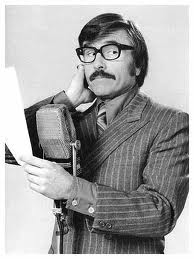
As soon as I heard Gary Owens, my goose was cooked. He was the zany afternoon guy at the station that was owned by Gene Autry, the singing cowboy, who also owned the Anaheim Angels or whatever they’re now called. Before the gig with Laugh-In, he was there every afternoon being silly and playing some stuff a little to the right and a little more corporate than Chuck was playing.


Then there were Roger Carroll and Johnny Magnus.


They jointly set up the Teenage Underground just in time for me to join as a teenager.


In an amazing stroke of luck I won tickets to see, at the Ambassador Hotel in Los Angeles, a TAU concert with Miss Ella Fitzgerald backed by Oscar Peterson, Ray Brown, and Ed Thigpen. That afternoon was a real ear-opener for me. In fact, I thought I’d be hearing things like Ella and Oscar for the rest of my life. As if!


Later high-flyers on the singing cowboy’s station included Bob Arbogast and Jack Margolis, who admitted over the air that they smoked pot and were against the war. It WAS a great time to be young, after all.


The thing that all these gentlemen had going for him is the dark and deep resonance of their voices, which added to the appeal of the music they were playing. Their voices were instruments which managed to grab me through the static of AM and the relative dearth of FM, sit my ass down, and play some music for me, along with associated hi-jinks.


By the time I’d become a disaffected teenager with a learner’s permit, I’d run into KPFK, the permanently-embattled Pacifica station in Cahuenga Pass. Blessed with a massive signal, the station was at the time home to Lowell Ponte, who led The Party of the Right and went on to obscurity as a minor talk show host. Then there was Elliot Mintz, who at the time was using the Youth Culture (whatever the hell THAT was) to break into the business of being a press agent to the impossibly glamorous.


Then there was Radio Free Oz, where the Firesign Theatre was born. If you’re asking who the FST was, you’re too young to understand who they were, but you could look it up in Wikipedia. Basically a freeform show hosted by Peter Bergman (another great LA radio voice) RF Oz hit me right between the eyes when I was most vulnerable, and I even started credible variations on the FST voices so I could memorize their records, which soon followed.


About this time, KRLA was playing during the news an incredible skit team called the Credibility Gap, and that’s where my radio dial was every day at least once. I had next to no interest in the music that was playing, but oh the satire of it all!


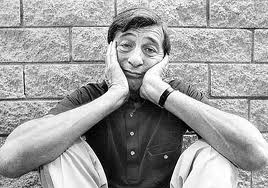
The best known of the Gap, and one of the great voices of our age, was Harry Shearer, who’s been doing voices on the Simpsons, as well as the bass player in the various incarnations of Spinal Tap, for a very, very long time.


The Gap was edgy in a way that satire could only be that was written the day it was performed, and these guys knocked me out. (Harry’s still doing great things, including a documentary about the levees breaking in his adopted home, New Orleans.)


Then I moved to Santa Cruz, where there were a lot fewer radio stations.


Thursday, September 29, 2011

Cabrillo Countdown: The Real Cabrillo


I can hardly believe this is happening. After nearly a year of kicking around ideas about a Cabrillo College alumni band made of musicians of a certain age, honoring Lile Cruse, our band director back at the founding of the band in the seventies, we are actually doing it. "It" will be at Kuumbwa Jazz Center in Santa Cruz, in just a couple days.

I hate the poster. Why did I not step forward and volunteer my graphic design skills?

Lile looks like Herbert L. Clarke in the photo. Also, several of our number won't be there, but I suppose that's the way it goes. But we will have a full band of eager players, the promise of at least one full house, some great charts to run, and camaraderie that will have withstood our decades apart.

Here's the truth: Lile rounded up, in every sense of the word, a motley group of hippies and hardened Vietnam vets and gave us the authority to have a little fun with music, something I personally needed at the time. When he recruited me he didn't even give me time to think about it. Next I knew I was sitting next to an impossibly young Paul Contos. Now it's nearly 40 years later, and it's amazing how central music is to the lives of the guys (and gal!) who will make up the band on October 1.

Real heroes include Danny, who beat the drum mercilessly in the local press, Matt, who flew in all the way from Barcelona for this, Rich, Billy and Brad, all of whom turned down the kind of gigs musicians ought not turn down to free up a rehearsal day on Friday and the gigging day, Saturday.

Folks start arriving tomorrow, and I can hardly wait.

Sunday, September 4, 2011

Sydney Greenstreet and the End of Jazz As We Know It


Let's call this guy Sydney Greenstreet. Not so much for his girth (I fought girth all my life, after all . . . ) but as a way to identify him in the context of the Greenstreet characters late of the cinema: the plotting, the deviousness, the sureness of his evil intent, the shiftiness of the eyes which evade contact with other warm-blooded creatures.

In January, I was knocking around the rooms of my old college because my enamored one was teaching that night, It so happened that her teaching was being done close to the music building. The new music building is a deeply-flawed new building which replaced a deeply-flawed old building and now looks to be 20 years older than it is because the budget no longer allows for simple maintenance. Once there were mighty musicians who trod the boards in the (old) building. More about that in a future posting which will shamelessly plug a reunion of these musicians.

So back to January. I had driven myself to the college with my horns in the trunk—some of them anyway—thinking that if I could play a few notes it would be a good night. What I walked in on was a crisis.

Sydney Greenstreet was nowhere to be found, although he'd made a commitment to playing a semester at the helm of the reed section in the jazz ensemble. He was not answering his mobile and, in fact, he may have been still out of the country on a vacation. I walk in and offer my services to the band director, who plugs me in and that is that. The rest of the semester I am playing lead alto in the current version of a band that I joined in January of 1973, an interval of 38 years.

Sydney shows up finally a couple rehearsals later, plays loud tenor and complains throughout. On packing up, he quits.

I was (happily) oblivious what was going on with Sydney and the band director, but they seemed to have a cordial enough thing going between them while they were having phone tag, but the band director was visibly shaken when Greenstreet welched on his commitment to even play tenor—featured tenor, mind you—that they had made in the prior semester.

I did my best to lead a section of scruffy learners who had a tendency (especially the tenors who plugged into the section to replace Sydney) to forget about rehearsal even though it was the same time every Thursday night. Not the best readers, the section fought its way to resectable concert performances anyway.

Cut to the start of the current fall semester and I find myself drawn as if a moth to a flame to the music building once more for a look at the first rehearsal of the band. Actually it was the vain hope that someone else, someone far more qualified, someone who could count two bars without slowing down at the top of a tune, someone who had been to the Big Show (also with Kenton) would this semester lead the band. But there was the band director, and there, in due time, walked Sydney Greenstreet.

Everybody in the music racket knows a guy like Sydney. He has an agenda and the way he carries it out is to play more notes louder and faster than anybody else in the tri-county area. His warm-ups are legendary for their ear-splitting volume. He'll never subsume his sound into a section because he just won't share the spotlight. Jazz for him is a contact sport, one that begins the moment he takes his own out of the case and runs endless diminished scales at top volume.

It's all about Greenstreet, all the time. He's usually in a small enough town that he won't get his ass handed to him. And he has his protectors. They are usually band directors who think, "If I could only harness his loud sound and flurry of notes for my purposes many good things could ensue for my band."

They are wrong.

Improving the band's quality is off the table. Only the self-aggrandizing alto feature will capture the interest of Sidney Greenstreet, so you're looking at an endless number of them.

Once, in LA (at the Big Show, which is held in two places only in the US, both of which I lived in) I played in a big band that had a sax section made up of four Greenstreets and me, The problem is that when you've got a Greenstreet, let alone four Greenstreets, you better have a backup for each one. I had to back up all of them at one time or another, because each of them had important business that would draw them away from rehearsing or even performing with the band. I became a floater in that section, alto one week, baritone the next, then tenor.

This I fear is the fate of my old college band: Having looked at the situation and figuring that I had no interest in backstopping Sydney Greenstreet, and after a rehearsal on the low tenor chair I told the band director that I thought my business at this place was done. That's something, when you consider how many years I have in this place.

Better it should happen in that first rehearsal, when things are all new and everything is possible.

Now that some of it has come back to me due to to certain wagging tongues that were in the rehearsal room, let me say that I wanted to save myself the bother of watching Sydney Greensteet subvert the very nature of jazz and of the band. I don't want to see the band director press jazz education into a neat pyrotechnic box where the players become automatic wind-up toys and explode on cue.

Jazz is pretty important to me. I've learned that it's the gentle stuff that matters. Not all ballads, but an approach to every subgenre that has respect for what's going on.

Here's what Tony Campise taught me: "Swing your ass off. Remember the blues. Put things into their right places."

I couldn't do that in the rehearsal room for a new semester, so that's why I faded into the parking lot. I hope my fellow saxophonists in the section I left behind understand that that's why I decided not to join the band this semester.


I haven't talked much about Tony Campise since he passed. There was no better example than Tony of someone who COULD have turned his considerable talents and abilities into the Greenstreet of all Greenstreets.

But in his Aw-shucks-Texas kind of way Tony, son of Sicilian greengrocers in Houston, realized that jazz is fun and you ought to grab all the fun you can get your hands on.

Tony never let his prodigious technique get in the way of his ability to play the blues. Nobody I ever heard could do what Tony could do. He never resorted to the film flam of running all-purpose diminished patterns over every dominant seventh chord in a tune.

And Tony played better flute than most classical flute players. (Tony would never show up without all his doubles to any rehearsal or gig, however modest.)

There are plenty of examples of Tony Campise on YouTube, some of them awful cell phone camera affairs from great distances, all of them worth checking out.

My favorite album of Tony's is the most straight-ahead. It's called First Takes.

I believe that Tony Campise is the anti-Greenstreet, and I urge you to listen to his music and feel the joy in his playing.

Friday, August 19, 2011

Aligning Myself With the Forces of Darkness

OK, so the bandleader called back and offered me the gig on the 20th of August which I described in the last post.

I could have said no. When it's all over, I might very well wish I had. But I need the money and I want to work. Not to mention this being exactly the thing I do pretty well.

How the worm turned and things he got around to calling me again I'll never know. We re-enacted that awkward conversation about "What is your rate," but I made it simple for him by asking what the other guys are making, which he wouldn't tell me of course, but which made the opening for him to offer me a sum that I consider respectable.

Now I'm committed to two rehearsals, one on Sunday the 14th up at this end of the bay, one in Monterey next week on an undetermined weeknight, and the gig itself, which if I understand correctly will be at a somewhat new restaurant.

There look to be two horns, me and a trombone player.

Then the guy sends my a buttload of MP3 files of Frank singing Frank. Like I need this. OK, so I'll be listening for keys and going with the backgrounds I remember. I mentioned that I have a book, but he was non-responsive so I let it drop. Too bad. I could have a whole book for the gig but it'll cost ya, buddy!

It all reminds me of the old English folks I used to encounter on the QE2 who were taking her last World Cruise in 2008. The would fulminate about the old ship being sold to Dubai for "mere money." I will, it appears, work for anybody offering me the same.

Sideman Follies, or What's It Take To Be a Bandleader?


Just in case you were wondering what the mental health requirements are for being a bandleader in the current economy, let me fill you in.

I've been in Santa Cruz for long enough to have established a little cred by sitting in around town, doing uncompensated rehearsing of other people's bands (OPBs) and generally making a nuisance of myself. I work in the only music store dealing with band and orchestra instruments in a serious way. People are in and out of here every day taking advantage of the boss's good nature for instant gratification repairs (IGRs) at low or no cost because of the trivial nature they see to the turning of the right screw on an adjustment, a screw they themselves could not even FIND much less TURN. I've done some rehearsing of my own band, and did a couple gigs where I was bandleader for not a princely sum but enough to get the troops deployed. (Not without its consequences though. I had a piano player and a trumpet player cancel on a paid gig in June less than a week before the gig, leaving me in the lurch with my limited knowledge of the local scene to scuffle for subs.)

Anyway, back to the matter at hand. Two days ago I'm at work with my phone off and a voicemail comes from a singer-bandleader saying I'd been recommended by Zach, the young Soquel-based drummer who is just a kick to play with. The gig was on the 20th of August, and he was checking my availability. As soon as I got the message I called him back, and left a message on HIS voicemail saying YES I CAN DO IT. I tried again into the night, but got voicemail every time I tried. The next day I tried again, got voicemail, restated my availability for the gig, and I went off to work.

Once again, I try not to use my phone at work, because that's how I was brought up. After work I had to meet with Sue to set up her Itinerary for the January Wine Tour in France, so we slogged that out with my zero knowledge of French spelling, she very patient, me designing as I go, something the Old Fellows who taught me the graphic arts racket would never do.

It wasn't until I was at my seven o'clock rehearsal at Casa Dryden by Cabrillo, where Zach was the drummer, that I thought to check my phone. I asked Zach the rundown on the cat who he'd recommended me to and I'll keep that conversation privaleged as his confessor. Emboldened, I dialed the number of this guy.

Huzza! Finally an answer, though not the one I'd expected!

Seeing he hadn't TALKED to me (never mind whose fault THAT was) he decided to go with another saxophone player! Through the gritted teeth of a 60-year old "new cat" in town (although I lived here before) I heard this turkey trying to turn the tables on me, like it wasn't his fault that he didn't check his own voicemail.

But that's not the part that pissed me off. He asked me what my rate was. My RATE?? WTF does THAT have to do with anything? I told him, look, I moved here from Austin, where I was working with my 4-horn book with various Sinatra-like singers in front, and I've been here 8 months now and I don't HAVE a RATE!

After I cooled off a little Zach said he'd still the waters at least for the possibility of future gigs.

But here's what this cat is missing by not using me on the 20th:

I show up early, not "on time," but genuinely early.

I wear what I'm told to wear, not trying to upstage anybody in the process.

I know all the tunes you'll likely play by memory, and I can transpose in my head.

I can read anything you put in front of me, and I can transpose THOSE parts in my head.

At the end of the night I help knock down. I don't leave until I can't do anything more to help.


So that's how it goes with the state of bandleading in the central coast of California.

"Oh," in the words of Duke Ellington, "Don't worry, we've got plenty more . . . "

Saturday, April 2, 2011

Listen! Another Giant Has Fallen.

(I wrote this in September, 2007, right before I joined the QE2 in Southampton. My other blog is closing down, but I decided to save a few posts that are important to me.)


I met him once, when my friend Ginger (who now teaches flute in Houston) took me to one of his Duke classes, in 1975. Ginger was a composition major at Berklee, a school which then doted on its guitar players but had enough respect for Herb that it practically enshrined two of his classes, Line Writing and Duke Ellington, after Herb returned to the school in the mid-seventies. Even though he had never met me, he made me feel right at home auditing his class, during which he played 78 rpm records and explained, as best as anyone could, what was going on. It was an impressive performance.

Afterward we talked, and to my astonishment, Herb told me about my dad's writing when they were both at Berklee--then called Shillinger House. He told me about a big band book my dad had written for a 13-piece band and how he was so proud of it that he had tried to get Herb out to Fitchburg to hear it. (Forty miles was a lot longer back then.) Herb continued until I had to leave, filling me in on a few details I didn't know about the band, and about my dad's education. (My dad was the first drummer to be admitted to what became Berklee. Back then drummers hardly ever read music.) The funny thing was, my dad's 13-piece big band was started right after I was born. At the time I met Herb I was 24, just off the Stan Kenton band.

There's nobody I know that Herb didn't touch this way. He made you feel special for just being there. He ran rehearsals the same way. Believe me, it's a struggle to get to a band rehearsal when you're playing 2nd Tenor Saxophone. You need to know that you're making a difference to make the rehearsal. Herb knew that, and knew how to bring out the best in your playing, because he knew what was going on musically all around him, and how important the internal parts are. This he learned himself from a lifetime of study of Duke.

It's easy to grow cynical in the world of music. While music becomes not so much an artistic pursuit as a study in survival, there are plenty of posers who get paid more than Crosus and Duke put together ever imagined. And yet, these are the people the mainstream press talks about as "musicians," people who mastered the are to lip-synching and who perform not music, but spectacle, and derivative spectacle at that.

That's what made Herb's life all the more remarkable. When he was 22, he was playing with Charlie Parker. Yet he never wavered in his resolve as a bandleader, as a teacher, as a player. He didn't have any bad habits. He never went to rehab or drove a Jaguar into a tree.

The night Duke died, I had tickets to see the Basie band play a gig in an old movie palace in Oakland, California. Needless to say, there was a bit of a wet blanket on the festivities. Basie himself pulled the plug a little early. I remember thinking that, if Basie was upset, there was something to be upset about. There was something, I reasoned, that would not and could not be replaced by Duke's passing. And so it was. No new Duke rose.

And so it is with Herb Pomeroy, son and grandson of Gloucester dentists. You made a difference.

See Herb's Wikipedia listing here.

Sunday, October 24, 2010

The Ballad of Jim Baum


I’m having a rough time writing this. I’ve been putting it off for weeks. It's been weeks since I got on an airplane and headed toward California and a memorial service for one of my oldest, dearest friends, Jim Baum.

Jim was sixty-one, working as a gigging drummer and a taxi driver in Santa Cruz, where we met nearly 40 years ago. He was the drummer in the Cabrillo Jazz Ensemble when I started playing second alto, balancing my last 2 years at UCSC, where I was very much a different sort of a musician. I sat next to Paul Contos, who has been leading the Monterey Festival High School Jazz Band for quite a while now. The bass player was Steve Bennett, who died early this spring from cancer, but carved out quite a career for himself as a bass player and as a pilot. Paul Nagel played piano in the band, Bob Contos (Paul’s brother) played first trumpet. A crazy surfer kid named Danny Young played trumpet, next to him a crazy hippie named Robin Anderson. Dennis Broughton, who founded California Brazil Camp, played congas and percussion. Lile Crews directed the band. I can say that that band, of all the big bands I was in since, had something special, a swinging edge that is sometimes lost when jazz is taught and studied in college.

A lot of that can be attributed to the rhythm section of Nagel, Bennett, Broughton, and Baum, who should have set up a law firm and made themselves partners to use that terrific combination of names.

Toward the end of my first semester at Cabrillo, we were devastated to hear that Nagel and Baum had been offered a road gig, playing with Robben Ford, backing up Jimmy Witherspoon. Replacements were hastily arranged, but the spirit of the band was gone when Paul Nagel and Jim Baum left town.

By the time Jim got back to town, there was an emerging scene in town, revolving around the Cabrillo Band. Jim was playing in a band called Fafner (the dragon from Wagner’s Ring cycle, as I was learning in my other musical life across town at UCSC) with Bennett on bass, Bob & Paul Contos on trumpet and reeds, and various other characters. Fafner was one of those bands that was delightfully doomed from the start, unlike, for example Harper’s Bizarre, a loccal band that DID make good because of management getting them to hold some lines.

I graduated UCSC and chose to stick around town and play in the Cabrillo Band, which by that time was really swinging. I went on the road with a couple bands, but I always came back to Santa Cruz. There were gigs there, not enough to make a living, but enough to challenge me.

Jim came back too, when the gig with Spoon fell apart, and every time thereafter when he toured or moved for greener pastures.

In the next few years, Jim and I played together a lot, mostly in de facto ensembles set up to cover someone’s wedding we’d managed to snag. Jim had a day gig: playing with Don McCaslin outdoors at Cooper House. Aside from the fact that this band made virtually nothing for their 7-day-a-week efforts (and they were playing right across the street from the Santa Cruz Local of the Musicians Union) the band raised the jazz visibility quotient in Santa Cruz, proving that hippies can play jazz too. Predictably, when a muralist and part-time conga player built the mural of Warmth, McCaslin’s band, Jim was in the center, almost like Christ at the last supper.

Back then, Jim drove a 1941 Plymouth businessman’s coupe, a car built for salesmen who needed a place for their sample cases. With a half seat behind the drive and the long wheelbase of an American car of the day, the gray primered Plymouth Jim fit his drum cases into the space behind the front seat, where the sample cases once were carried all across the midwest. David O’Connor drove a bright yellow businessman’s coupe, making for a strange fleet in the musician division, Santa Cruz chapter.

Whenever one of my buddies from back east showed up for a few days, I’d call Baum and we’d hang out, so the Visitors from the East could get some idea of what being a working musician in a small coastal town in California was like. We’d scoop up Baum after the Cooper House gig and go out to Tampico on lower Pacific Avenue for enchiladas. I remember one time that Jim surprised a New Yorker by saying his car was unlocked, and flabbergasted him by showing him that the keys were still in the ignition.

Then there was the LED watch. Jim knew a guy in the business, like he knew a guy in almost any business. Anyway, this particular guy offered to make him a watch with virtually any phrase of two words or less programmed into the watch. So after a few minutes’ thought Jim selected CHOW TIME as the phrase which showed up on the watch for a few seconds before the time was displayed. Jim would ask a pretty girl on the gig, and there were a lot of pretty girls on the gig, to ask him what time it was. Then he’d grin and punch the button on the side of the watch, saying, just as it was displaying CHOW TIME, “It’s CHOW TIME!”

Santa Cruz was an interesting place in those days. I was playing with a band called Sofrito, which was started by a conga player from Puerto Rico named Raul Rivera. One of our steady gigs was at the Crow’s Nest, a chophouse at the mouth of the yacht harbor. After a while I was wotking there with the first iteration of Scary Lala, a band led by Larry Scala with Tom Moelering on bass, Jim, and me on reeds. Scary Lala copped two nights at the Crow’s Nest, all good news for me because I was living within walking distance of the place. There was a LOT of cocaine going through Santa Cruz at the time. Legend had it that the giant seagoing trimarans which looked to be pleasure craft were disappearing from the harbor for a couple months at a time were returning from South America with one pontoon filled with white powder. We were spoiled at the Crow’s Nest by folks who genuinely dug what we were doing. Jim was into the scene. He never missed an opportunity to have a snort (of any sort), nor did he let too many good-looking gals go without enveloping them like the smooth operator he was. I remember his favorite line with the ladies was, “So, xxxx, do you ever go out on dates or anything like that?”

In 1977, I loaded up a VM microbus and headed out for New York City. Jim came along, to test himself musically. We drove all the way to North Platte, Nebraska before we stopped for anything more than gas. I had driven all the way from Santa Cruz, and Jim was popping bennies and babbling on like a beatnik that he was. Somewhere east of Grand Island I heard him calling me from the driver’s seat as I was napping and I saw that Jim had our entire stash of bennies on his tongue. He was really sailing then, so I decided to move up to the front of the bus and make sure Jim was cool. Somewhere near Omaha Jim suggested it might be a good idea for me to drive. I settled into the driver’s seat, he went crashed on the bed in the back. The next time I heard from Jim we were in Pennsylvania. I was still driving, and I had tried at each stop for fuel to wake Jim without result. It wasn’t until we crossed the last mountains into New Jersey that Jim woke up.

Jim stayed longer in New York than I did. He moved into the city, while I needed to stay with Sharon Wong and her then-husband Mark Buchalter in Englewood, New Jersey to stay remotely sane. Famously, Jim, whose expressed intention was to play with Bill Evans, got to play a few tunes with Bill when he was between drummers after Elliot Zigmon left the trio. He didn’t get the gig, but it was Mission Accomplished. The van accumulated sufficient parking tickets in the city to render it property of the City of New York when it was finally towed off for a violation.

I returned to Santa Cruz and re-orchestrated a resurgent Sofrito, but what I really wanted to do was play in Woody Herman’s band. My friend on the band who was trying to leave told me that I should think about building a reputation outside of Surf City, so I packed up and moved to Los Angeles to do just that. If memory serves, Jim came back to Santa Cruz just as I was leaving, in 1979. I drove off in a 1959 VW bug to an uncertain place where I would have to prove myself all over again.

The next time I was Jim was at my wedding, October 10, 1981, at the Balboa Bay Club. Jim was there with a redhead who was carrying his child. I believe she was a singer. Somewhere there’s a picture of the Santa Cruz contingent at the wedding. I gather that that child grew up and now lives in Portland.

Soon after, Jim met Gayle Mozée, whose brother Ben played tenor in the Cabrillo band. Gayle was from what I hear pregnant, abandoned and working on a law degree. Jim stepped in and took over the fathering of Gayle’s child. By the time I met them as a couple they had two of their own. Gayle was working in San Jose, with a daily dose of Highway 17, each direction. Jim seemed like the perfect domestic husband, working gigs at night and taking care of the kids by day. I know there are temptations on the gig, and they come looking for you. Some temptations Jim had already established that he was susceptible to.

I don’t presume to judge Gayle, I didn’t know her well enough for that. They always seemed a model tight couple to me whenever I saw them. But I know what it feels to be deprived of music by a loved one, and it’s a lot worse that a mouse being deprived of its cheese. Some time in the nineties Gayle told Jim to stop playing music until the kids were grown. Jim being Jim, he shrugged and got a job at the Ace Hardware store on the west side of Santa Cruz. With me it was more subtle than that, no ultimatum.

Jim returned to playing just a couple years ago. The kids were well launched. I’m sure he felt that his job was done.

I went to the hardware store in the middle of May, 2010, when we’d come out for my daughter’s college graduation. Jim had quit a month before and nobody seemed to know how to contact him. I shrugged, resolved to look him up when I had more time, and headed up the coast.

What happened next is the part I cannot understand. Gayle and Jim were having trouble. Jim moved from their westside home to an apartment in Live Oak. Here’s a pretty well-balanced account from the Santa Cruz Sentinel, October 7, 2010, by Wallace Baine:

It will likely be a long time, perhaps years, before the shock of Jimmy Baum's death gives way to warm reflections on his life and music. But a memorial event Sunday at the Kuumbwa Jazz Center is, said its organizers, a first step in that direction.
On Sept. 24, the 61-year-old Baum, a well-known and accomplished jazz drummer in Santa Cruz, was shot and killed by his estranged wife Gayle Mozee-Baum, who then turned the gun on herself. The murder-suicide has shaken the tight-knit Santa Cruz musical community, which is expected to turn out in huge numbers Sunday at Kuumbwa for what is being billed a celebration of his life.

"The loss is just incalculable," said Santa Cruz bassist Stan Poplin, a bandmate and friend of Baum's going back almost 40 years. "We'll all miss him terribly. I lost two friends in this. I loved Gayle, too. And in this celebration, we're just not going to have any negativity."

Poplin said friends were aware that the couple had a troubled marriage. After 25 years together, they had in recent months separated and Baum had moved out of the family home. But, said Poplin, the seriousness of the Baums' situation was not well-known.

"I don't know how to understand how it came to this," said Poplin. "Jimmy downplayed a lot of it. We could see there was trouble. But the most he would say was, Well, Gayle's having problems.'"

The Kuumbwa is the natural place to gather in Baum's memory. Baum played a role in the famed jazz club's early days as the drummer in the unofficial Kuumbwa house band. Baum, in fact, is a significant part of Santa Cruz's jazz history.
He came to Santa Cruz 40 years ago from his original home town of Atascadero in San Luis Obispo County. At Atascadero High, Baum's father was the head of the music department and young Jimmy, along with his two younger brothers, excelled in academics, music and athletics. Besides playing trumpet in the school band, Jimmy was also the quarterback of the school football team.

"He was kind of a god," said Bill Bosch of Boulder Creek, a bass player who was a freshman at Atascadero High when Jim Baum was a senior. The two later became bandmates with the popular 1980s Santa Cruz soul band the Cool Jerks.

When Baum first moved to Santa Cruz, he hooked up with Poplin, pianist Paul Nagel and the young guitarist Robben Ford in a blues band that showcased Ford's preternatural talents. The band caught the ear of the legendary blues singer Jimmy Witherspoon who soon hired the whole line-up to be his backing band on the road. In his early 20s, Jimmy Baum found himself playing on big stages all over the world including at the Monterey Jazz Festival in 1973.

When the wild ride with Witherspoon came to its inevitable end, Baum bounced around throughout the 1970s, moving to New York, where he worked as a cab driver while studying jazz drumming. When he arrived back in Santa Cruz in late 1970s, he instantly became part of the downtown Santa Cruz scene centered around the Cooper House, where he sat in with Don McCaslin's Warmth. He re-upped with Poplin and began playing serious jazz gigs with the Hy-Tones with Poplin, Nagel and saxophonist Paul Contos.

Though he was playing in a number of styles and taking just about every gig he could find, Baum, said friends, nursed a fierce devotion to jazz, particularly upbeat, swinging jazz.

"Jimmy was not a competitive guy. He had no ego," said Bosch, who had played three separate gigs with Baum in the two weeks preceding his death. "Throughout his life, he would take lessons from all sorts of people, just to learn. It was all about getting better at playing drums."

"Jimmy loved to talk shop," said friend and veteran jazz drummer Charles Levin. "He swung hard. He had a great groove. Swinging is not something you can really teach. It really transcends technique in a lot of ways and he had it."

Baum had one son by a previous marriage and three sons with Gayle. In the 1990s, Baum surprised friends and music colleagues by announcing he was done with playing music. "He decided to be a stay-at-home dad," said Poplin. "It was a big sacrifice for him."

In the last couple of years, however, Baum jumped back into regular gigging and was in fact playing drums on stage the night before he was killed.

"It's beyond processing," former bandmate Paul Nagel said of Baum's violent death. "He was so personable and self-deprecating. And he was really well-liked."

Nagel, who now lives in Massachusetts, had lost touch with Baum until 2008, when Baum called shortly after he heard that Nagel had been diagnosed with leukemia. As a bandmate, Nagel particularly remembers Jimmy's coolness under pressure. Years ago, the two were playing back-up to rock legend Chuck Berry. As the concert approached, Berry was nowhere to be found.

"So, Jim just jumps up and starts ad-libbing to the crowd, like a stand-up comedian. The crowd was getting restless to see Chuck Berry and Jimmy just took down the pressure. I remember thinking, Wow, that guy's got guts.'"

Stan Poplin, who met his wife through his association with Jimmy Baum, points to Baum's self-awareness on stage as a mark of professionalism.

"Jimmy was always aware of people dancing. Most musicians don't think too much about dancers. But for Jimmy, he kept an eye on them. Because, he said, If they're not groovin', you're not doing your job.'"

JIMMY BAUM

BORN: Feb. 12, 1949


DIED: Sept. 24, 2010


HOME: Santa Cruz


OCCUPATION: Jazz/blues drummer, formerly with the Robben Ford Band and the Jimmy Witherspoon Band, as well as the Hy-Tones and Cool Jerks and several other groups and combos.


SURVIVORS: Sons Stephen John Jacques of Portland, Ore., Cameron, Tjader and Parker Mozee-Baum from Santa Cruz
SERVICES: A celebration of the life and music of Jimmy Baum will take place at the Kuumbwa Jazz Center from 2-6 p.m. on Sunday. The music will continue at Bocci's Cellar after the Kuumbwa event. A fund in his memory has been created at Bay Federal Credit Union to help his four sons. Those who wish may contribute to this fund or any charity in Jim's name.

++++++++++++++

So what really happened? My guess is we’ll never know. The forces between them were so much like icebergs with only a small fraction of their mass exposed. In deference to his sons, three of whom have lost their mother in this tragedy, and due to the fact that I have no real insights into the dynamics the couple was laboring under, I choose not to condemn Gayle out of hand.

But, if I could ask her, I’d love to pose this one question about the tragic events of September 24, 2010. That question is this: “Gayle, as an officer of the court, as one who stands up for justice, what makes you think you can condemn someone you love—and yourself—to execution? Do you have the right to declare any of Jim’s actions worthy of the penalty of death? And can you justify the pain you’ve caused to your sons, your family and your friends?”

I’ll never know the answers to these questions.